
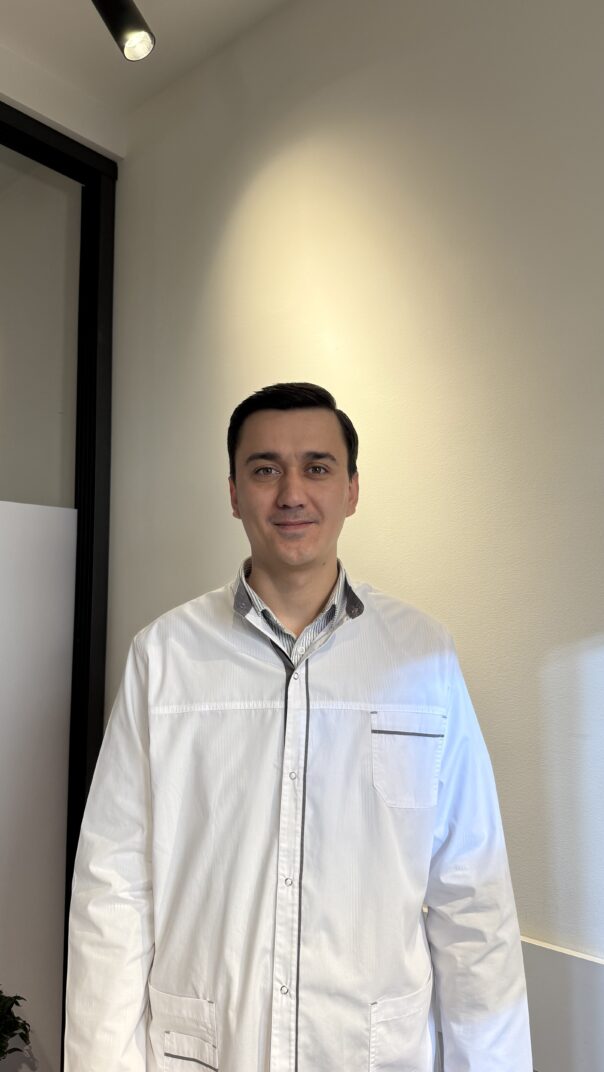
Geneticist
Experience: 7 years

Genetic testing is a medical test that helps identify health risks, nutritional needs, genetic predisposition, and other individual characteristics by analyzing a person’s genetic makeup.
Genetic testing procedures
You may have a family history of genetic diseases and want to know if you have a high risk of developing the disease in the future and take precautions. Accurate DNA testing, analysis, and reporting can help you:
Encourage the maintenance or improvement of your overall health and fitness.
Identify and prevent the risk of complex hereditary diseases such as diabetes, hypertension, familial hypercholesterolemia, affecting the heart, kidneys, peripheral nervous system, and eyes.
Identify and prevent the risk of neurodegenerative and psychiatric disorders such as Huntington’s disease and Alzheimer’s disease.
Identify and prevent the risk of cancer, especially if cancer runs in your family.
To identify carriers of genetic diseases in people with a family history of growth retardation, epilepsy, autism.
To support the development of individualized treatment and monitoring strategies for reproductive disorders such as infertility and recurrent miscarriages by identifying genetic causes.
To provide the necessary information to couples planning a pregnancy to ensure a healthy child due to the high risk of certain genetic diseases associated with ethnic origin.
To help solve weight control problems that cannot be solved with diet and exercise.
To help develop a dietary program that matches your genetic metabolic structure.
To determine an exercise plan that is appropriate for your muscle structure.
Genetic testing can be performed on people of all ages who want to identify genetic diseases, maintain health and youth throughout life, and protect future generations from diseases.
| Service Name | Service Fee (UZS) |
| Embryo thawing and biopsy for genetic analysis | 6,000,000 |
| NGS of 1 embryo | 5,600,000 |
| NGS of 2 embryos | 10,000,000 |
| NGS of 3 or more embryos (per embryo) | 4,500,000 |
| Karyotype analysis, expert level (with karyogram) | 1,350,000 |
| Molecular karyotyping of abortive material | 2,400,000 |
| Analysis of genetic polymorphisms associated with thrombosis risk (with integrative risk calculation) | 1,350,000 |
| Extended search for AZFa microdeletions of the Y chromosome | 1,600,000 |
| NIPT T21 | 2,800,000 |
| NIPT basic panel | 3,500,000 |
| NIPT standard panel | 4,000,000 |
| NIPT extended panel | 6,000,000 |
| Sex inversion 46XY – SRY gene presence analysis | 1,000,000 |
| Non-invasive fetal sex determination (standard test) | 2,500,000 |
| Non-invasive fetal Rh factor determination | 1,800,000 |
| Embryo kinship determination | 2,800,000 |
| Confirmation of mutation detected by NGS using Sanger sequencing | 1,500,000 |
| Whole-exome sequencing (WES), expert level with clinical interpretation | 8,000,000 |
| Sequencing of one clinically significant gene | 3,000,000 |
| CMA (Chromosomal Microarray Analysis) | 3,500,000 |
| Congenital adrenal hyperplasia (adrenogenital syndrome), search for 15 pathogenic variants in the CYP21A2 gene | 2,700,000 |
| Fragile X syndrome – determination of CGG repeat number | 2,000,000 |
| Hereditary disease screening | 5,800,000 |
| Gilbert syndrome | 800,000 |
| Preimplantation genetic testing PGT-A EXPRESS | 12,000,000 |
| Whole-exome sequencing EXPERT | 9,000,000 |
| Preimplantation genetic diagnosis for monogenic diseases (PGT-M), development of an individual test system | 9,000,000 |
| Cystic fibrosis – extended search for common CFTR gene mutations | 3,000,000 |
| DNA extraction and storage for up to 365 days | 800,000 |
| Whole-genome sequencing of abortive material “Fertus” | 13,500,000 |
| Thalassemia | 5,800,000 |
| Prenatal non-invasive paternity testing | 9,400,000 |
| Whole-genome sequencing GenomeUNI | 16,000,000 |
| Whole-genome sequencing of proband and parents (3 persons) GenomeUNI | 38,000,000 |
| Comprehensive “DUET” study (husband + wife) | 16,000,000 |